Most people who visit the Andaman Islands spend their days between Havelock’s Radhanagar Beach and Neil Island’s coral gardens. That is a fine way to spend a holiday. For many travelers, this routine defines a restful pace and creates lasting memories.
But it means they miss Baratang Island entirely, and Baratang Island is genuinely unlike anything else in the archipelago.
Roughly halfway between Port Blair and Diglipur, Baratang Island holds three rare features in the Andamans. A natural limestone cave system is reachable only by boat through a mangrove creek. A cluster of active mud volcanoes releases gray semi-liquid mud that bubbles to the surface. And a small uninhabited island hosts thousands of parrots at dusk for a brief, memorable spectacle.
Getting here requires a pre-dawn start and a police-escorted convoy. The route goes through the Jarawa Tribal Reserve, strictly protected and traveled only under escort. But the effort makes it feel like a discovery rather than a tourist stop.
By the end of this Baratang travel guide, you will have everything you need to plan a Baratang day trip with confidence: the convoy timings, the permit requirements, what to pack, how much to budget, and how to fit it all into a single coherent day, or into something much bigger.
Why Baratang Island is worth the early start
Baratang Island doesn’t follow the island-beach-resort pattern of the rest of the Andaman circuit. The draw here is geology and wilderness, not sunbathing and snorkeling. That is a meaningful distinction, and it is why the people who visit tend to describe it as one of the most memorable days of their entire Andaman trip.
The limestone cave and how it formed
The Baratang Island limestone cave is a naturally formed cave system shaped over long geologic times. Inside, stalactites and stalagmites rise and hang in formations lit by torchlight. Photographs rarely capture the effect. The scene feels timeless. Visitors describe the sense of quiet as special.
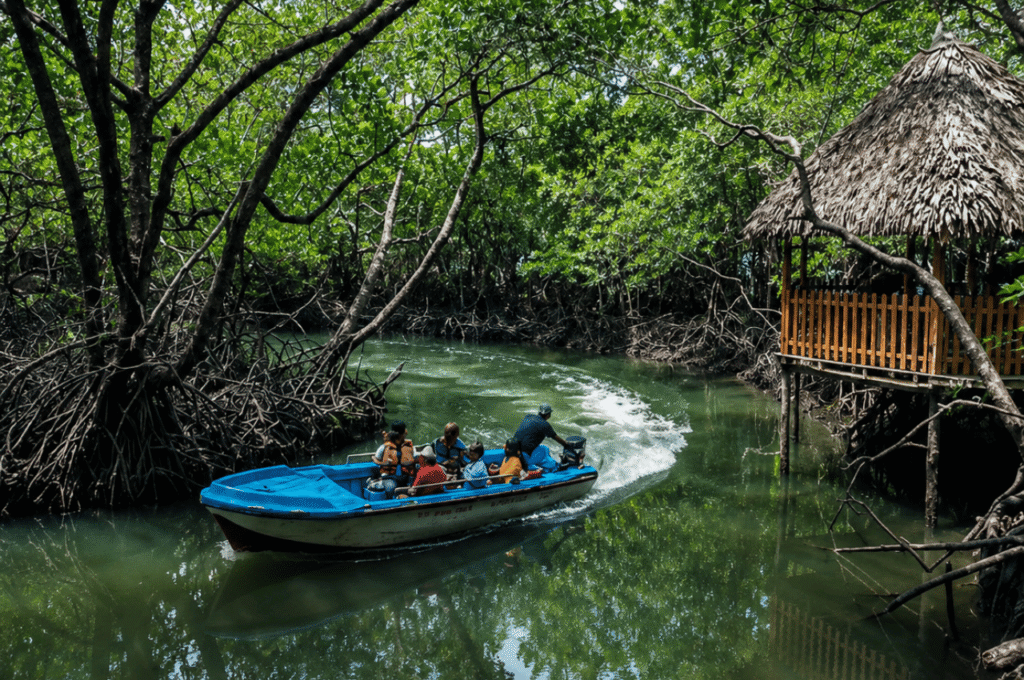
Unlike other caves, you don’t drive to a car park. You reach the cave after a 30-minute boat ride through a narrow mangrove waterway. Where the canopy closes overhead, the water is dark green and calm. The only sound is the low hum of the engine. Most people say the boat ride stays with them as long as the cave itself.
The mud volcanoes: a rare geological feature
These are not volcanic mountains. Baratang’s mud volcanoes are low-lying mounds from which semi-liquid mud and gases bubble continuously to the surface. India has very few of them, and seeing them for the first time is a genuinely odd experience: the gray mud moves slowly, occasionally making a soft popping sound, and the whole thing looks like something from a science textbook brought to life. A short jungle trail leads to the site, and most people combine the mud volcanoes and Baratang limestone cave into a single circuit on the island.
Parrot Island at dusk
Parrot Island is Baratang’s quietest attraction and often its most surprising one. A short motorboat ride from the main jetty brings you to a small uninhabited island where thousands of parrots return to roost at sunset. The viewing window is short, typically around 3:00 PM to 4:00 PM, based on visitor accounts of when the birds gather in the greatest numbers. It is the kind of thing that resists description and sticks with you anyway.
Best time to visit Baratang Island and what to bring
The November to February window gives the most reliable conditions for a Baratang Island trip: lower humidity, calmer roads, clearer skies, and no monsoon disruptions to convoy schedules. The broader October to April window is workable, with March and April being slightly hotter but still manageable for a full day’s travel. If your dates fall between June and September, plan this trip for another visit. Monsoon rains make the jungle trail slippery, the mangrove creek choppier, and convoy delays more frequent. During the monsoon months, boat services to Baratang Island have been suspended in some years, so verify conditions well in advance.
For Parrot Island specifically, plan to be back at the Baratang jetty by 3:00 PM. That is when the birds begin gathering in numbers, and arriving too late means the spectacle is already over. Build your day’s schedule backwards from this window if the parrots are a priority.
When it comes to packing, keep things light and practical, you will be on your feet for most of the day across varied terrain. Conditions shift between open boat rides, shaded jungle trails, and a dark cave interior, so layer accordingly.
- Light cotton clothing that breathes well in humid conditions
- Closed-toe shoes with grip, not sandals, because the mud volcano trail and cave approach involve uneven ground
- A compact raincoat or windbreaker if you are traveling in shoulder season
- Sunscreen and a hat for the open-boat stretches
- A dry bag for your phone, documents, and anything that shouldn’t get wet
- Enough water and snacks for the full day, because food availability on Baratang Island is genuinely limited
- A small torch or your phone’s flashlight for inside the cave
Getting to Baratang Island from Port Blair
There are two routes, and the right one depends on your schedule and what kind of experience you want.
The road and convoy route
The standard approach follows the Andaman Trunk Road from Port Blair to the Jirkatang check post. Then a timed, police-escorted convoy through the Jarawa Tribal Reserve. A vehicle ferry crosses Middle Strait to reach Baratang Island.
The distance from Port Blair to Jirkatang is roughly 40 to 46 km. That translates to about one to one and a half hours of driving. Total one-way travel time is typically 3 to 4 hours. This includes the convoy and ferry. A full same-day return trip runs 10 to 12 hours.
To catch the earliest convoy and maximize your time on the island, you need to leave Port Blair by 3:30 AM to 4:00 AM. That is not a misprint. The first convoy from Jirkatang departs around 6:00 AM, and arriving early gives you time to clear the permit checks without rushing. Later convoys at 9:00 AM, 12:00 PM, and 3:00 PM are available, but each one cuts significantly into the time you have on Baratang Island. For a comfortable same-day trip, the 6:00 AM convoy is the one to aim for.
Return convoys towards Port Blair typically run around 12:00 PM and 3:00 PM. Verify the current timings before your trip, as they can shift during peak season or on public holidays.
The sea route option
A direct catamaran service now runs from Haddo Jetty in Port Blair to Baratang Island, operated by Makruzz (MV Makruzz Pearl). The departure is at 5:45 AM, with arrival at Baratang Island at 7:45 AM. The service runs daily from 1 October 2026 to 15 June 2027. Fares are around ?2,300 plus a ?50 port fee, with higher rates during the mid-December to mid-January peak. Note that there is no direct return sailing from Baratang Island to Port Blair on this service; the vessel continues to Havelock at noon. This route cuts journey time significantly and avoids the Jarawa Reserve stretch entirely, but confirm current availability and return logistics before booking, particularly if you are planning a same-day return to Port Blair.
The Jarawa Reserve convoy: rules every visitor must follow
The road to Baratang Island passes through the Jarawa Tribal Reserve, home to the Jarawa people, one of the few remaining tribes who have chosen limited contact with the outside world. The Indian government manages the Andaman Trunk Road corridor through the reserve with escorted convoys specifically to protect the tribe from exploitation, disease transmission, and cultural disruption. The convoy is not optional, and the rules during it are strictly enforced.
What you must not do inside the reserve
No stopping inside the reserve at any point during convoy movement. No photography or videography anywhere within the reserve boundary, official guidance states that photo-capable devices should be switched off entirely, not merely put away. Penalties for photographing or videotaping tribal people in the reserve include seizure of the device and up to seven years’ imprisonment plus a fine of ?10,000. No interaction with Jarawa individuals of any kind, including gestures, offering food, or handing over items. Closed windows are required during the reserve crossing. Two-wheelers are not permitted on this route at all; only four-wheelers, buses, and coaches are allowed through the convoy.
If someone in a vehicle violates these rules, the entire convoy can be halted, the offending vehicle turned back, and a formal complaint filed. Take these rules seriously, not just for legal reasons, but because the Jarawa people’s right to live without interference is worth respecting.
Permits and documentation
A forest permit is required to visit the Baratang limestone cave because access passes through regulated reserve areas. The permit fee is around ?50 to ?100 per person and is collected at the jetty or check post on the day, not purchased in advance online. If you are booking a packaged day tour, permit assistance is typically included in the price. For independent travelers, permits are organized at the jetty through the Forest Department. Carry your identity documents, as they are checked at Jirkatang before convoy entry. International visitors should carry passport copies.
The mangrove creek and limestone cave: what to expect
From the Baratang Island jetty, the limestone cave is not reachable on foot. You board a small motorboat for a 30-minute journey through a narrow mangrove waterway. The vegetation closes in on either side, the water is calm and dark, and the journey has a quietness to it that feels genuinely removed from the rest of the world. Treat this as an experience in its own right, not just a transfer. Boat charges are typically separate from the permit fee and are usually included in packaged tours.
After the boat drops you off, a short walk leads to the cave entrance. Inside, stalactites hang from the ceiling and the formations are more impressive than the modest size of the cave suggests. Most visits inside last 30 to 45 minutes. The Baratang Island cave is best visited in the morning or early afternoon; access closes in the early afternoon, which is another reason the earliest convoy matters. A torch makes the experience considerably better than relying on your phone screen in a dark limestone chamber.
Mud volcanoes and Parrot Island: the rest of your Baratang day
The mud volcano site is reached via a short jungle trail from the road, allow roughly 30 to 45 minutes for the return walk and time at the site itself. The volcanic mounds are modest in size but entirely unlike anything else you will encounter on an Andaman trip. Semi-liquid gray mud bubbles up slowly and continuously, with occasional soft pops from the gases below. There is no admission fee. Wear shoes you don’t mind muddying, and be careful on the terrain after rain as it becomes genuinely slippery.
Parrot Island is an evening activity, and it doesn’t fit a same-day Port Blair return unless you plan carefully. If you are doing a full day on Baratang Island rather than rushing back, be at the Baratang jetty by 3:00 PM to board the boat for Parrot Island. The bird-watching window is short, typically 3:00 PM to 4:00 PM as the parrots gather before roosting. The boat ride and waiting time add roughly two hours to the day. If you are staying overnight on Baratang Island, this is the natural way to end it.
What a Baratang Island day trip actually costs
For most domestic travelers joining a shared day tour from Port Blair, the range is roughly ?1,800 to ?2,500 per person. At this price point, most operators include hotel pickup and drop in Port Blair, cab transport, convoy permit assistance, and boat tickets for the mangrove creek route. A guide may or may not be included depending on the operator. Meals are rarely part of the package; carry your own or budget an additional ?200 to ?400 for food on the island.
A private cab for a Baratang Island day trip typically costs ?4,500 to ?6,500 depending on vehicle type. That is per vehicle, not per person, so for a group of four or five, it works out to be reasonably competitive with shared tours. The clear advantage of a private cab is schedule flexibility and no waiting around for other passengers at each stop. For families with children or older travelers, a private vehicle is the more comfortable and practical option.
Check what is included before you book. Some operators quote trip costs without boat charges or forest permit fees. Boat charges for the limestone cave route vary by season, boat type, and whether you share with other passengers. Parrot Island boat rides are almost always charged separately from the main day tour price.
Making Baratang Island part of a longer Andaman adventure
The biggest limitation of the standard Port Blair day-trip format is time. Leaving at 4:00 AM and returning at 9:00 PM means spending the majority of the day in transit, not on Baratang Island. Baratang deserves more than that. When it forms part of a multi-day, multi-island itinerary rather than a standalone excursion, it stops feeling rushed and starts feeling like the immersive experience it actually is.
For travelers who want to see more than Havelock and Neil, the north-central islands open up a completely different version of the Andamans. Baratang Island’s geological character, Lalaji Bay’s empty white-sand beach, and the dramatic landscape of Barren Island, India’s only active volcano, make for a journey that covers geological, ecological, and marine terrain in a way no standard package itinerary comes close to. The challenge is that these locations are spread across the archipelago and are not served by regular ferry routes.
A custom private boat charter is how serious island explorers string these stops together on their own terms. Andaman Island Spirit Charters operates bespoke multi-day itineraries out of Port Blair, Havelock, and Neil Island, with crew who know the archipelago’s remote corners well. Private charters give you the flexibility to sequence stops like Baratang Island, Lalaji Bay, and Barren Island into a coherent, unhurried journey, arriving rested, spending the day properly, and continuing to the next destination on your own timeline rather than being bound by convoy schedules and shared van seats. If that sounds like the kind of Baratang tour you want to build, get in touch and the team will plan it around you.
Ready to plan your Baratang Island trip
Baratang rewards the people who plan properly for it. The limestone cave, mud volcanoes, mangrove creek, and Parrot Island together make for a genuinely different kind of Andaman day, one that has nothing to do with beaches or resorts and everything to do with the raw, strange, and beautiful character of this archipelago. Get the convoy timing right, sort your permits, pack light, and start early. You will have a day that most Andaman visitors never experience.
If a single rushed day trip from Port Blair feels like too compressed a way to do Baratang Island justice, use it as the anchor point for a longer itinerary that reaches further into the islands. Baratang Island is a great place to discover. It is an even better place to discover on the way to somewhere else.
Frequently asked questions about visiting Baratang Island
How do I reach Baratang Island from Port Blair?
The most common route follows the Andaman Trunk Road to Jirkatang, then a police-escorted convoy through the Jarawa Tribal Reserve and a short vehicle ferry crossing. A sea route via Makruzz catamaran from Haddo Jetty is also available (departing 5:45 AM), arriving at Baratang Island around 7:45 AM. The road journey typically takes 3 to 4 hours one way.
Do I need a permit to visit Baratang Island?
Yes. A forest permit is required for the limestone cave visit. The fee is approximately ?50 to ?100 per person, paid at the jetty or check post on the day. Carry valid identity documents; international visitors should bring passport copies.
What is the best time of year for a Baratang Island visit?
November to February offers the most reliable conditions, cooler temperatures, calm roads, and no monsoon disruptions. October to April is broadly workable. Avoid June to September if possible, as monsoon conditions affect jungle trails, boat services, and convoy schedules.
Can I visit Baratang Island and Parrot Island in a single day from Port Blair?
It is possible but requires careful planning. Leave Port Blair by 3:30, 4:00 AM to join the 6:00 AM convoy, complete the cave and mud volcano circuit in the morning, and return to the Baratang jetty by 3:00 PM for the Parrot Island boat. This makes for a 10 to 12-hour day with limited margin for delays.
Is a Baratang tour suitable for families with children?
Yes, though the early start and long travel time can be tiring for young children. A private cab or chartered transport is more comfortable than a shared tour for families. The cave interior, jungle trail, and boat rides are all manageable for most age groups with appropriate footwear and preparation.